Partial deliveries: following what is left to deliver
When an order leaves in several trips or from several depots, the remainder gets lost. How to deliver line by line, and close an order that will never be complete.
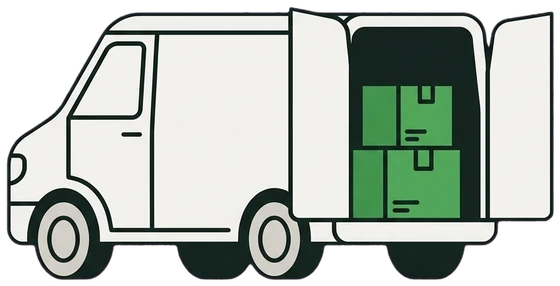
The truck cannot take the whole order. Or one product sits in another depot, or the stock runs short on a single line. So the goods leave in parts, and the questions begin. The client calls the rep to ask where the rest is. The rep calls the depot. The depot looks through its delivery notes and tries to work out what is still owed.
For the director, the trouble shows up later. Old orders stay open with a remainder nobody will ever deliver, the stock looks promised when it is not, and accounts wonders what can be invoiced.
Why partial deliveries are hard to follow
The order is one document and the deliveries are several. On paper or in a spreadsheet, the remainder is a sum someone has to redo every time, line by line and depot by depot. That sum is easy to get wrong, and it is usually done by whoever picked up the phone. Most companies ship partially all the time, so this is an ordinary day and not an exception.
Delivering line by line, from each product’s depot
In DeepComm the depot delivers in one go or in several, line by line. Lines of the same order can leave from different depots, and each is followed on its own. A stock manager sees the orders of his depots and confirms only his own products. The delivery note is written automatically, each one reduces what is left to deliver, and the app refuses to deliver more than was ordered.
The goods leave on the company’s truck, with its delivery agent, or the client sends a truck to collect them, and the order keeps the mode and the plate. Each delivery then goes through five stages, dated as they change: to plan, planned, in preparation, on the way, delivered. When the client calls, the rep can read the answer instead of phoning the depot.
The truck often leaves before the paperwork is final
Reality on a loading bay does not wait for the office, and the app allows for that with two moments in a delivery.
A provisional delivery note is made at loading. The truck can leave with it, and the stock has not moved yet, so the note can still be corrected or simply deleted. Validating the note confirms the goods have gone: the stock is deducted and the note becomes final.
If the depot does not have enough stock at the moment of validation, the note stays provisional, nothing is lost, and the operator tries again after restocking. A final note cannot be cancelled like a draft, because the stock has already moved, so it goes through a cancellation request.
What to do when an order will never be complete
Sometimes the remainder is not coming. The client has received part of the order and that is the end of it. General or regional management can open the order and reduce it to the quantity delivered. A preview shows the new total first, and confirming removes the undelivered remainder, so no phantom balance stays open.
The money follows automatically. If the undelivered part had already been cashed, the overpayment goes to the client’s reusable balance, available for his next orders, and no cash refund is created. If he had paid only an advance, or nothing, the amount due is simply lowered.
The opposite case exists too. If a client received more than he ordered, the line can be completed up to the quantity received, and an additional delivery note and invoice are created for the surplus alone, at the same negotiated price.
An order that already has deliveries or invoices cannot be cancelled. When someone tries, the app says why in plain words and points to what to do instead: reduce the order, or deal with the client’s balance.