What your clients owe you today, and who to chase first
When sales and finance give two different figures for what clients owe, both can be right. How to read receivables by status and by age, and decide who to call.
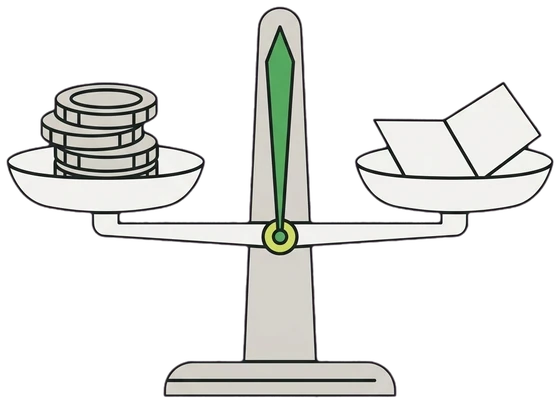
A director asks how much the company is owed. Finance gives one figure. The sales team gives another. Each region has its own spreadsheet, and by the time someone reconciles them it has taken two days and three phone calls, and the answer is already out of date.
Then comes the second question, the one that brings the money in: who do we call first? Without a clear view, the rep tends to chase the clients he knows best, and the office chases whoever shouts least.
Why two people give two different figures
Often neither of them is wrong. They are counting different things. One figure includes cheques received and the other does not. One starts from invoices and the other from what has been delivered. One region updates its file weekly, another when it has time. “What clients owe” sounds like one number, and in most distribution companies it is several numbers that nobody has separated.
The client balance separates money from promises
DeepComm holds the order, the delivery, the invoice and the payment together, and the client balance is built from that chain, so the figures come from what happened rather than from anyone’s file. Each client’s position reads across these columns, which together explain everything invoiced:
- Cashed: money received and available, whether cash, transfers or cheques already cashed.
- Covered: cheques and promissory notes handed in and not yet cashed. In transit, and not yet money.
- Disputed: amounts carried by refused or contested paper, still to be recovered.
- Remaining: what is left to settle.
What is delivered and not yet cashed appears as a figure of its own. Finance and sales are now looking at the same lines, and an argument over the total turns into a useful conversation about a specific client.
Payments apply themselves to open invoices, oldest first. If a client pays more than he owes, the excess becomes an advance he can use later, and nobody has to split the amount by hand.
Who to chase first: read receivables by age
The total tells you how much. The age tells you where to start. Receivables read by bracket, 0 to 30 days, 31 to 60, 61 to 90, and beyond, and the app also tracks due dates, late payments and the average collection time.
The brackets change the shape of the call list. A large recent amount and a smaller old one do not call for the same conversation, and in a list sorted by amount alone the old one tends to stay at the bottom, which is usually where it gets harder to collect.
The loyalty scoring adds another reading, with clients marked active, at risk or dormant. An active client who is late and a dormant client with an old debt are different situations, even when the sums match.
Having the statement in hand when you call
A chase goes badly when the client disputes the figure and the caller has nothing to show. The client statement covers a chosen period, with delivery notes, amounts, debits and credits, and the balance due, and it exports to Excel or PDF. Reps have it for their own clients, and each client can see his own balance in his own space, so both sides can start from the same page.
General management can also ask the assistant, in French or in Arabic, by text or by voice: “Which clients are late on payment?” or “Which orders are delivered but not yet paid?” It only sees what the role of the person asking allows.
For a company starting out, opening balances for clients and suppliers can be entered one by one or imported from a file, so the balances are right from the first day.