Paying sales commissions on what is delivered and settled
Commission disputes start when the rep counts orders taken and the office counts money received. How to open a commission only on an order delivered and settled.

The month ends, and two lists appear. The rep has his, with every order he took. The regional director has his, with what has really come in. Between them sit orders not yet delivered, a client still paying in instalments, and a cheque that came back. The conversation that follows is uncomfortable for both, and it comes round again the next month.
For the rep the commission is a large part of why he gets up in the morning, and any doubt about it costs more than the amount at stake. For the director, a commission paid on a sale that later falls apart is money lost twice.
What should a commission be paid on?
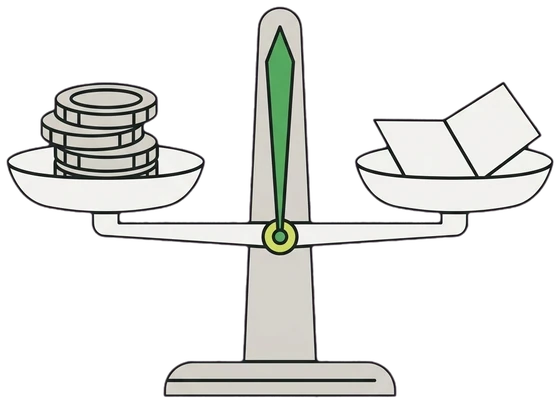
Companies answer this in different ways, and the answer shapes how reps behave. Pay on orders taken, and you reward volume, including volume sold to clients who will pay late or never. Pay on invoices, and you still carry the risk of what stays unpaid. Pay on money received, and the rep has a reason to care about what happens after the visit.
DeepComm takes a clear side. An order delivered and settled opens the commission. Nothing is paid on a promise.
How a commission gets decided
The module works in two steps, and the steps are simple enough to follow on a phone.
A “not processed” tab lists the orders that are fully paid and have no commission recorded yet. The regional director opens them and sets the commission, either as an amount for the whole order or as an amount per unit multiplied by the quantity. He records it for the rep concerned, with a date, and can add a note. The order then moves to the “closed” tab, marked as paid.
DeepComm does not impose a fixed scale. The calculation is decided case by case, and the app provides the frame and keeps the record. A company with strict rules applies them here. A company that negotiates by product or by client can do that too, and the decision remains written down.
What the rep sees, and what he cannot touch
The rep reads his own commissions, pending and then acquired, from the same phone he uses to take orders. He can never change the rate, which stays with the direction. He does not see anyone else’s.
This changes the monthly conversation. When a commission is still pending, the reason is on the order: it has not been fully delivered, or it has not been fully settled, and the rep can look at which. He also has a practical reason to follow his deliveries and his clients’ cheques, since his own money depends on them.
That only holds if the data underneath is honest, which is why the chain matters. The order, the delivery note, the payment and the invoice are linked, so “delivered” and “settled” are facts recorded by the people who did the work and need no one’s declaration at the end of the month. A cheque stays out of the money until it is cashed.
What the direction sees
Regional management handles the commissions of its own team, and general management sees all of them. Lists filter by period and by seller, the detail goes down to each order, and commissions also appear in the statistics, which export.
Commission makes more sense when read alongside margin. The margin in the app compares what was delivered and invoiced with the real cost of the goods that left the stock, and it is broken down by seller. A director can therefore see what each rep sold, what it earned the company and what he was paid for it, on figures that nobody had to rebuild by hand.